What is Group Therapy? Your Complete Guide
If you're reading this, something has brought you here. Maybe your child is struggling with friendships at school. Maybe your teenager feels misunderstood and alone, even in a crowd. Maybe your young adult seems stuck—anxious, isolated, unsure how to move forward. You've heard about group therapy, but you're not quite sure what it is, how it works, or if it could really help.
I understand. As both a therapist and a parent, I know how hard it is to watch your child struggle. And I know how confusing it can be to sort through all the therapy options out there, trying to figure out what's actually going to make a difference.
Here's what I want you to know: group therapy is one of the most powerful tools we have for helping children, teens, and young adults work through social difficulties, learn how to connect with others, and feel less alone. When kids struggle to make or keep friends, when they feel anxious in social situations, when they can't seem to get along with peers or family members, group therapy gives them a safe place to practice, to mess up, to try again, and to discover that they're more capable than they thought.
As a Certified Group Psychotherapist (CGP)—a specialized credential that represents advanced training in group therapy—I've witnessed firsthand how transformative this work can be. Let me walk you through what group therapy is, how it works, and whether it might be right for your family.
What is group therapy, and how does it work?
Group therapy is a small group of people who come together regularly to work on their challenges collaboratively in a safe, structured, and confidential environment led by a trained therapist.
At The Wellness Collective, group therapy means bringing together 6-8 kids, teens, or young adults who are facing similar developmental stages and challenges. These aren't random groupings—we carefully match members by age, stage, and readiness so that everyone can relate to each other and benefit from the experience.
But here's what makes group therapy different from, say, a support group or a class: it's not just about sharing your problems and getting advice. It's about using the group itself as the place where healing happens. The relationships you build with other group members, the ways you interact, the patterns that show up—that's where the real work occurs.
Think about it this way: if your child struggles with friendships, we could spend months talking about why friendships are hard in individual therapy. Or we could put them in a room with other kids and let them actually practice building friendships in real-time, with support and guidance. That's the power of group therapy.
Everyone in the group makes a commitment—to show up consistently, to be honest, to respect confidentiality, and to support each other's growth. Group therapy taps into something we all need: the sense that we're not alone, that others understand us, and that we have something valuable to offer.
What happens in a typical group therapy session?
Group sessions are typically 90 minutes long and include check-ins, sharing, mutual support, honest feedback, and real-time interactions that mirror what happens in everyday relationships.
Let me paint a picture of what a session might look like.
The group gathers in a comfortable, private space. Everyone sits in a circle—there's no hierarchy here. We start with check-ins. Each person shares something about their week. Maybe one teen talks about a fight with their mom. Maybe another mentions feeling anxious about an upcoming test.
From there, the conversation unfolds organically. Sometimes one person's story resonates with someone else. Sometimes a conflict that happened between two group members the previous week needs to be addressed. Sometimes someone is quiet, and the group gently invites them to share what's on their mind.
Here's what makes group therapy so powerful: everything that happens in the room is material for growth. If someone interrupts another person, we talk about it. If someone always tries to fix other people's problems instead of just listening, we explore that pattern. If someone shuts down when things get emotional, the group helps them stay present.
There are moments of tears—when someone finally feels safe enough to share something they've been holding inside. There are moments of laughter—inside jokes develop, genuine bonds form. There are moments of tension—when someone calls out a behavior that's bothering them, and the group works through it together.
By the end of 90 minutes, something has shifted. Someone feels less alone. Someone practiced speaking up. Someone learned that conflict doesn't have to mean the end of a relationship. Someone helped someone else.
How is group therapy different from individual therapy?
Group therapy focuses on healing through relationships and real-time interactions with peers, while individual therapy focuses more on introspection and your inner world.
Both types of therapy are valuable, but they work in fundamentally different ways.
In individual therapy, you have your therapist's full attention for the entire session. You talk about your thoughts, your feelings, your past experiences. It's introspective work—looking inward to understand yourself better.
In group therapy, the focus shifts outward. Instead of just thinking about yourself, you start paying attention to what happens between people. How do you show up in relationships? What patterns do you notice? How do others experience you? This kind of learning can only happen with other people in the room.
Group therapy also brings in two powerful healing factors that individual therapy can't provide:
Universality: The profound relief of realizing you're not the only one. When your teen hears another teen say, "I feel that way too," something shifts. They're not broken. They're not weird. They're human, and they're not alone.
Altruism: The healing that comes from helping others. When your child offers support to another group member, they discover that they have value, that they matter, that they're capable of making a difference. This builds confidence in a way that receiving help alone cannot.
Here's what I tell parents: Individual therapy helps your child understand themselves. Group therapy helps your child understand themselves in relationship to others. And since we don't live in isolation—since life happens in connection with other people—that relational learning is essential.
How long do groups last, and how often do sessions meet?
Groups meet once a week for 90 minutes, and members typically participate for several months to a year or longer, depending on their needs and progress.
I know what you might be thinking: 90 minutes is a long time. Once a week is a big commitment. Is it really necessary?
Here's the truth: meaningful change doesn't happen quickly, and it doesn't happen sporadically. Building trust takes time. Learning new ways of relating takes practice. Developing confidence in social situations requires repetition.
Think about it this way: your child spends hours every day on activities that matter to you—school, homework, sports, music lessons. Ninety minutes a week to work on their emotional health and relationships? That's not too much. That's essential.
The weekly rhythm matters too. When groups meet consistently at the same time every week, it creates stability and predictability. Kids know they have this safe space waiting for them.
As for how long someone stays in a group, that varies. Some teens join for a school year and leave feeling significantly better. Others stay for multiple years because they've found something valuable. We work collaboratively with families to figure out when someone is ready to move on.
Is group therapy confidential? What if someone shares my story?
Yes, group therapy is completely confidential. Every member signs a confidentiality agreement, and in over 20 years of practice, breaches of confidentiality are extremely rare.
I understand this concern. For parents, the worry is often about your family's private business being discussed at school or in the community. For teens, the fear is even more intense—they're terrified that their vulnerabilities will be exposed or used against them.
Let me be very clear: confidentiality is the foundation of group therapy. Without it, the safety that allows for real vulnerability and growth cannot exist.
Before anyone joins a group, they sign a confidentiality agreement. We discuss what confidentiality means, why it matters, and what the consequences would be if it were broken. For younger kids, we frame it in age-appropriate ways, but the message is the same: what's shared in group stays in group.
And here's what I've observed over two decades of running groups: people take this seriously. Group members develop deep respect for each other and for the sacred space they've created together.
Of course, there are legal and ethical limits to confidentiality that I explain upfront. If someone discloses abuse, if someone is in danger of hurting themselves or others, or if there's a court order requiring disclosure, I'm obligated to take appropriate action. But outside of these specific situations, what happens in group is protected.
How do you match kids and teens to the right group?
Through a comprehensive intake process that includes talking with the child or teen, parents, and sometimes other providers to ensure the right fit at the right time.
This is one of the most important parts of my work, and it's something we don't rush. Group therapy is incredibly powerful when the fit is right—and it can be frustrating or even harmful when the fit is wrong.
Here's what the process looks like:
First, I typically talk to the parent on the phone to understand what's going on. What are you seeing at home? What are your concerns? What are you hoping group therapy will provide?
Then I meet with your child or teen individually. I want to hear their perspective. What do they think is going on? Are they open to group therapy? What are their fears? What are they hoping for?
Parents are welcome to join for part of the intake appointment to answer any questions. Sometimes I'll also talk to other people involved in your child's care—their individual therapist, their school counselor. I want a complete picture.
Then I think carefully about the groups I'm currently running. What's the age range? What are the developmental stages of the other members? What are the group dynamics? Will this new person fit into the existing culture?
I'm looking at developmental stage, readiness, and balance. Sometimes someone isn't quite ready for group yet. Maybe they need individual therapy first to stabilize or build some foundational skills.
Here's what I tell families: my job is to set everyone up for success. If I think group therapy isn't the right fit right now, I'll tell you. That's not a rejection—it's me being thoughtful about what will actually help your child.
What is the goal of group therapy? What will my child gain?
The goal is to relieve symptoms, build confidence, develop authentic relationships, and give your child skills for navigating life's challenges—with the potential for profound and lasting healing.
Let's start with the basics. You're probably coming to group therapy because something isn't working. Maybe your child is anxious, depressed, isolated, or struggling socially. The first goal is to address those symptoms and help your child feel better.
But here's where group therapy goes beyond symptom relief: the skills your child learns in group transfer to every other area of their life.
In group, your child will learn how to speak up for themselves without aggression or people-pleasing, how to listen to others with empathy, how to handle conflict in ways that strengthen relationships, how to be vulnerable and ask for what they need, how to give and receive feedback without falling apart, and how to show up authentically instead of performing or hiding.
These aren't abstract concepts we lecture about. These are skills that get practiced in real-time, in the safety of the group, with guidance and support.
Here's what I've seen over 20+ years of doing this work: kids who go through group therapy show up differently in the world. They're more confident at school. They're better at navigating peer drama. They speak up in family conflicts instead of shutting down. They make deeper friendships. They recover more quickly from setbacks.
The sky really is the limit on the amount of healing that can happen in group therapy. I've watched anxious kids become leaders. I've watched isolated teens build genuine friendships for the first time. I've watched young adults who felt stuck and hopeless discover a sense of purpose and possibility.
Can group therapy help someone with social anxiety, high-functioning autism, or shyness?
Yes, absolutely. Group therapy can be especially powerful for kids who struggle socially because it provides a safe, structured place to practice social skills with immediate support and feedback.
I know this might sound counterintuitive. If your child is socially anxious or shy, the idea of putting them in a room with peers might feel scary. But here's what I need you to understand: group therapy is the safest possible environment for your child to work on social challenges.
Think about what happens in the real world. At school, in the cafeteria, at a party—social interactions are high-stakes and unpredictable. Your child doesn't know what to say. They worry about being judged. And when things go wrong, there's no one there to help them process it.
In group therapy, all of that changes.
For kids with social anxiety: Group provides gradual exposure to the exact situations they fear—but in a controlled environment where they're surrounded by support. And over time, as they see that connection is possible and that they're more capable than they thought, the anxiety loosens its grip.
For kids with high-functioning autism: Group therapy helps with social skills that don't come naturally—reading social cues, understanding perspective-taking, navigating unspoken rules. But more importantly, the group gives them a place to be themselves with peers who accept them.
For shy kids: Group therapy meets them where they are. No one is forced to talk. Shy kids can sit quietly at first, observing, getting comfortable. And gradually—on their own timeline—they start to speak up. I've watched shy kids transform in a group. They start with one-word answers, then short sentences, then they're volunteering thoughts, then they're offering support to others.
The key difference: in the outside world, kids with social challenges often feel like they're failing. In group therapy, they're practicing. And practice—with support, feedback, and encouragement—is how skills develop.
Ready to Take the Next Step?
Group therapy isn't a magic solution, but it is one of the most powerful tools we have for helping children, teens, and young adults develop the social and emotional skills they need to thrive. It gives them a place to belong, a place to be seen for who they really are, and a place to discover that they're capable of more than they realized.
At The Wellness Collective, we bring over 20 years of experience and specialized training as a Certified Group Psychotherapist to this work. I've witnessed the profound impact that group therapy can have—not just on symptoms, but on a young person's entire trajectory. All of our groups are led by me or supervised by me. Some of our other group leaders are also working on the Certified Group Psychotherapist certification–training and excellence in group work is something that we take seriously!
If you're wondering whether group therapy might be right for your child, I'd love to talk with you. We can explore what's going on, answer your specific questions, and figure out together whether group therapy is the right fit at this time.
Phone: 310-817-0599
Email: info@thewellnesscollectiveca.com
Let's connect and see how we can help your child feel more like themselves again.
About the Author
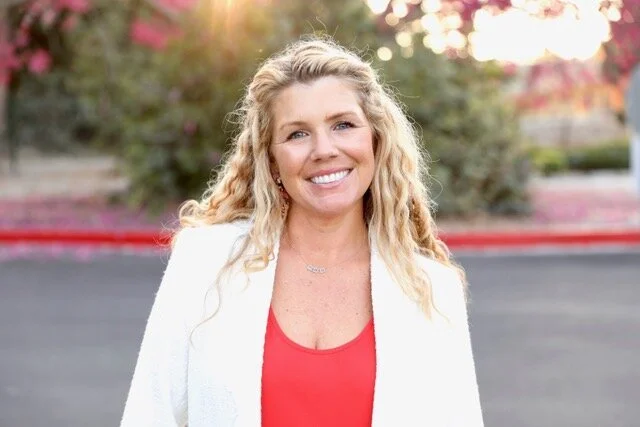
Leah Niehaus is a Licensed Clinical Social Worker and Certified Group Psychotherapist (CGP) with over 20 years of clinical experience specializing in group therapy for children, adolescents, and young adults. As the owner and Clinical Director of The Wellness Collective in Hermosa Beach, California, she has dedicated her career to helping individuals navigate life's challenges through the transformative power of group therapy.
Leah earned her Bachelor of Arts in Sociology from Pepperdine University and her Master's in Social Work from California State University, Long Beach. Her clinical background includes community mental health, public child welfare, and psychiatric social work at UCLA Neuropsychiatric Institute and Hospital. She has been in private practice for 21 years and has operated a group practice for 9 years.
As a Certified Group Psychotherapist—an advanced credential representing specialized expertise in group therapy—Leah is recognized as an expert in group dynamics and interpersonal process therapy. She was recently honored by the City of Hermosa Beach as "Best of Clinical Social Work 2023."
Leah is a CAMFT Certified Clinical Supervisor, training the next generation of therapists. She serves as an Ambassador for South Bay Families Connected and sits on the Manhattan Beach Unified School District Medical Advisory Board. She is an active member of the American Group Psychotherapy Association (AGPA),co-leads the Advanced Child & Adolescent Group Therapy Consult Group, and serves on the Public Outreach committee.
Leah is a frequent guest speaker and writer on parenting, adolescence, and group therapies. Her newsletter, "Lighter Touch with Leah," provides practical guidance for parents. As both a clinician and mother of three, she brings professional expertise and personal understanding to her work.
To learn more about Leah's approach or to schedule a free consultation, visit www.thewellnesscollectiveca.com or call 310-817-0599.
