Is Group Therapy Effective for Social Anxiety or Fear of Talking to Others?
If you or your child struggles with social anxiety or fear of talking to others, group therapy probably sounds like the last thing you'd want to try. Being in a room with peers when social situations feel terrifying? That seems backwards.
But here's what's counterintuitive: group therapy is actually one of the most effective treatments for social anxiety.
I know that sounds hard to believe. After 20 years of running groups, I've heard every version of "There's no way I can do this" or "My child will never speak in group." And yet, I've watched socially anxious kids and young adults gradually find their voice, build genuine connections, and discover that the catastrophe they feared doesn't happen.
Group therapy works for social anxiety because it's exposure therapy in the best possible way—gradual, supported, and in the context of real relationships that matter. Let me explain why.
Why is group therapy effective for social anxiety when it sounds so terrifying?
Group therapy is exposure therapy in the best way—gradual, supported, in context of real relationships. You're not just tolerating social situations, you're actually connecting with peers who matter. Research shows group therapy is highly effective for social anxiety because you practice in the exact situations you fear, with immediate feedback that challenges catastrophic predictions.
Social anxiety thrives on avoidance. The more you avoid the situations you fear, the bigger the anxiety gets. But forcing yourself into social situations without support doesn't work either—it just reinforces the terror.
Group therapy is different. It's exposure, yes—but it's exposure with support, with peers who understand, and at a pace you can handle.
Here's why it works:
You're practicing in the actual situation you fear. Individual therapy can help you understand your anxiety and learn coping skills. But you can't practice being in peer relationships one-on-one with a therapist. Group therapy puts you in the exact situation your anxiety tells you to avoid—being seen and heard by peers—in a way that's manageable.
You get immediate feedback that contradicts your predictions. Social anxiety tells you that if you speak up, people will judge you, reject you, or think you're stupid. In group therapy, you speak up (when you're ready) and discover that peers respond with understanding, validation, or "me too." Week after week, you build evidence that what your anxiety predicts doesn't actually happen.
You're not alone. One of the most powerful parts of group therapy for social anxiety is discovering that other people feel exactly the same way. When someone else says "I'm terrified to talk" and you think "me too," shame dissolves. You're not broken—you're human.
It's gradual. You're not forced to share deeply on day one. You can start by just showing up. Then maybe you share something small. Over time, as safety builds, you share more. The pacing is controlled by what you can handle.
Connection happens. Group therapy isn't just about tolerating social situations—it's about actually connecting with peers. And when you discover that people accept you, like you, and want to hear from you even when you're anxious, it changes something fundamental.
What actually happens in group therapy when you have social anxiety?
You start by just showing up—that's enough at first. The therapist manages pacing and safety. Other members understand because they struggle too. You practice speaking up gradually when it feels safe. You get feedback from peers that contradicts what your anxiety predicted. You build evidence over weeks that the catastrophe doesn't happen.
Let me describe what actually happens for someone with social anxiety in group:
Week 1-3: Just showing up is the work. You're terrified. Your anxiety is screaming at you not to go. But you show up. That's enough. You don't have to talk. You can listen. The therapist understands and doesn't force you.
Week 4-6: You start to notice something. Other group members are anxious too. Someone shares something vulnerable and the group responds with kindness. You think "Maybe it's safe here." You might share something small—maybe just your name and why you're here. People respond with understanding, not judgment.
Week 7-10: You start participating more. It's still scary, but less terrifying than it was. You notice that when you do speak, people listen. They don't laugh. They don't judge. Sometimes they say "I feel that way too." Your anxiety still spikes, but you're building evidence that you can handle it.
Week 11+: Something shifts. You still get anxious, but you're speaking up more. You're forming connections with other members. You actually look forward to group sometimes. You're discovering that people like you—not despite your anxiety, but just as you are.
The therapist managing the group matters enormously. They understand how to create safety, how to pace exposure, and how to manage anxiety in the room. They know when to gently encourage and when to let you observe. They help other members support each other rather than pushing too hard.
Is group therapy better than individual therapy for social anxiety?
Different, not better. Individual therapy helps you understand anxiety and learn coping skills—but you can't practice being in peer relationships one-on-one with a therapist. Group therapy provides what individual can't: real-time exposure with peers who matter, in relationships you care about, with immediate feedback. For many people with social anxiety, the combination of both works best.
Individual therapy for social anxiety is valuable. You can:
Understand where your anxiety comes from
Learn cognitive behavioral strategies
Process underlying issues
Build coping skills
Feel safe talking one-on-one
But individual therapy can't replicate what group therapy offers:
Real peer relationships where stakes feel high
Multiple perspectives, not just your therapist's
Exposure to the actual situations you fear
Feedback from people your age whose opinions matter
The experience of being seen and accepted by peers
For many people with social anxiety, the most effective approach is both. Individual therapy provides a foundation—you build some capacity, learn some skills, develop some understanding. Then group therapy provides the practice field where you use those skills in real relationships with peers.
At The Wellness Collective, we offer both individual and group therapy and often recommend combining them for people with social anxiety. We also collaborate with outside individual therapists when their clients join our groups.
Is group therapy right for everyone with social anxiety?
Not always. Severe social anxiety might need individual therapy first to build some capacity. Complete avoidance needs a gentle on-ramp. Group works best when there's at least some willingness to try, even if you're terrified.
Group therapy is highly effective for social anxiety, but it's not right for everyone or every situation.
Group therapy works well when:
You have mild to moderate social anxiety
You're willing to try, even if you're scared
You can tolerate being in a room with peers (even if you don't talk at first)
You're functioning but struggling
You've had some friendships in the past, even if maintaining them is hard
Individual therapy might be needed first when:
Social anxiety is so severe you can't leave the house
Panic attacks happen in any social situation
Complete avoidance has been the pattern for years
You need to build some capacity before group exposure
The combination works best when:
Social anxiety is moderate to severe
You need both the safety of individual therapy and the practice of group
You're stepping down from a higher level of care
Group Therapy for Social Anxiety in Hermosa Beach, CA
If you or your child struggles with social anxiety or fear of talking to others, group therapy offers something individual therapy can't: real-time practice in the exact situations you fear, with peers who understand, in relationships that matter.
At The Wellness Collective in Hermosa Beach, we specialize in interpersonal process groups for elementary girls, middle school girls, high school girls, and young adults. All of our groups are led by or supervised by a Certified Group Psychotherapist—ensuring that anxiety is managed safely and effectively in the group setting.
Many of our group members struggle with social anxiety. They're terrified at first. And over time, they find their voice, build genuine connections, and discover that what their anxiety predicted doesn't actually happen.
Wondering if group therapy could help with social anxiety?
Contact us to schedule a free 15-minute phone consultation. We'll talk about what's going on and help you determine if group therapy is right, or if individual therapy should come first.
Phone: 310-817-0599
Email: Info@thewellnesscollectiveca.com
Website: www.thewellnesscollectiveca.com
For more information about group therapy, read:
Can Group Therapy Help Someone with High-Functioning Autism or Social Anxiety?
Is Group Therapy Confidential—What If Someone Shares My Story?
How Do I Choose the Right Kind of Group Therapy for My Child, Teen, or Young Adult?
What is the Difference between a Time-Limited Group and an Open-Ended Group?
How Do I Know If My Child or Teen Needs a Social Skills Group?
Visit our Group Therapy page: www.thewellnesscollectiveca.com/group-therapy
About the Author
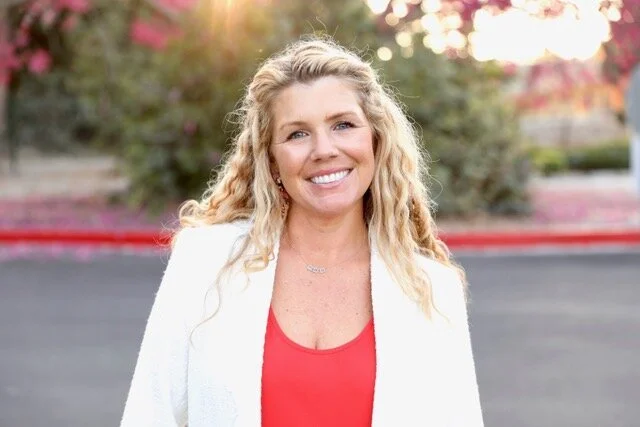
Leah Niehaus is a Licensed Clinical Social Worker and Certified Group Psychotherapist (CGP) with over 20 years of clinical experience specializing in group therapy for children, adolescents, and young adults. As the owner and Clinical Director of The Wellness Collective in Hermosa Beach, California, she has dedicated her career to helping individuals navigate life's challenges through the transformative power of group therapy.
Leah earned her Bachelor of Arts in Sociology from Pepperdine University and her Master's in Social Work from California State University, Long Beach. Her clinical background includes community mental health, public child welfare, and psychiatric social work at UCLA Neuropsychiatric Institute and Hospital. She has been in private practice for 21 years and has operated a group practice for 9 years.
As a Certified Group Psychotherapist—an advanced credential representing specialized expertise in group therapy—Leah is recognized as an expert in group dynamics and interpersonal process therapy. She was recently honored by the City of Hermosa Beach as "Best of Clinical Social Work 2023."
Leah is a CAMFT Certified Clinical Supervisor, training the next generation of therapists. She serves as an Ambassador for South Bay Families Connected and sits on the Manhattan Beach Unified School District Medical Advisory Board. She is an active member of the American Group Psychotherapy Association (AGPA),co-leads the Advanced Child & Adolescent Group Therapy Consult Group, and serves on the Public Outreach committee.
Leah is a frequent guest speaker and writer on parenting, adolescence, and group therapies. Her newsletter, "Lighter Touch with Leah," provides practical guidance for parents. As both a clinician and mother of three, she brings professional expertise and personal understanding to her work.
To learn more about Leah's approach or to schedule a free consultation, visit www.thewellnesscollectiveca.com or call 310-817-0599.
